Internal Communications
I genuinely enjoy internal communications. It’s the go-to channel for strengthening internal bonds, communicating executive vision and creating shared purpose as a unit. Here’s some of what I’ve created for Student Success and Well-Being.Our student success model BEAM (Belonging, Engaging, Achieving, Meaning) is a simple but powerful framework for self-assessment and talking with students about thriving. To bring the concept to life I developed a dedicated webpage with ways to test your knowledge; launched a series of BEAM Bulletins; developed a suite of custom virtual meeting backgrounds; and partnered with the committee on talking points and a PowerPoint for unit presentations.
Orientation Communications
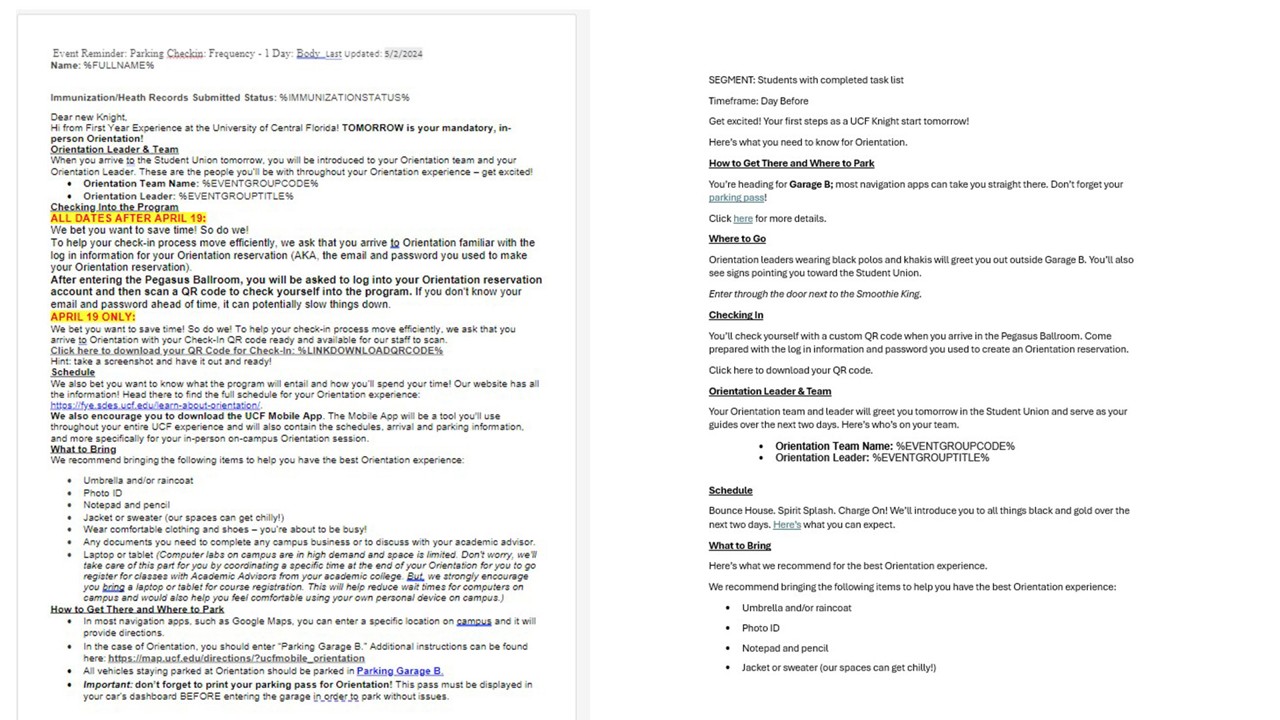
One of my first tasks (and my ongoing priority) in Student Success and Well-Being is streamlining student-facing communications. That’s a tall order. Consider we have one of the largest undergraduate student bodies in the U.S. at around 59,000 students. And we’re competing with 12 colleges that are also talking nonstop with their students. So, where to start? We eat the elephant in bites.
Over six months we mapped all communications to incoming freshmen before they arrive on campus. A common complaint was students arrived for orientation without completing key tasks like immunization records. Can you blame them? Our audit revealed:
- 388 total possible communications
- 91 communications topics
- 77% include a call to action
- 6 different communications platforms
When you’re that innudated with messages, how do you pick a priority? How do you decide who to trust and who to ignore? As project lead, I worked closely with stakeholders to develop a clear path forward, reducing redundancy, volume and expanding web resources to soak up all the extra information. The result:
- A centralized list of about 26 emails
- Emails rewritten for clarity
- Expanded and refreshed orientation website
Academic Notice
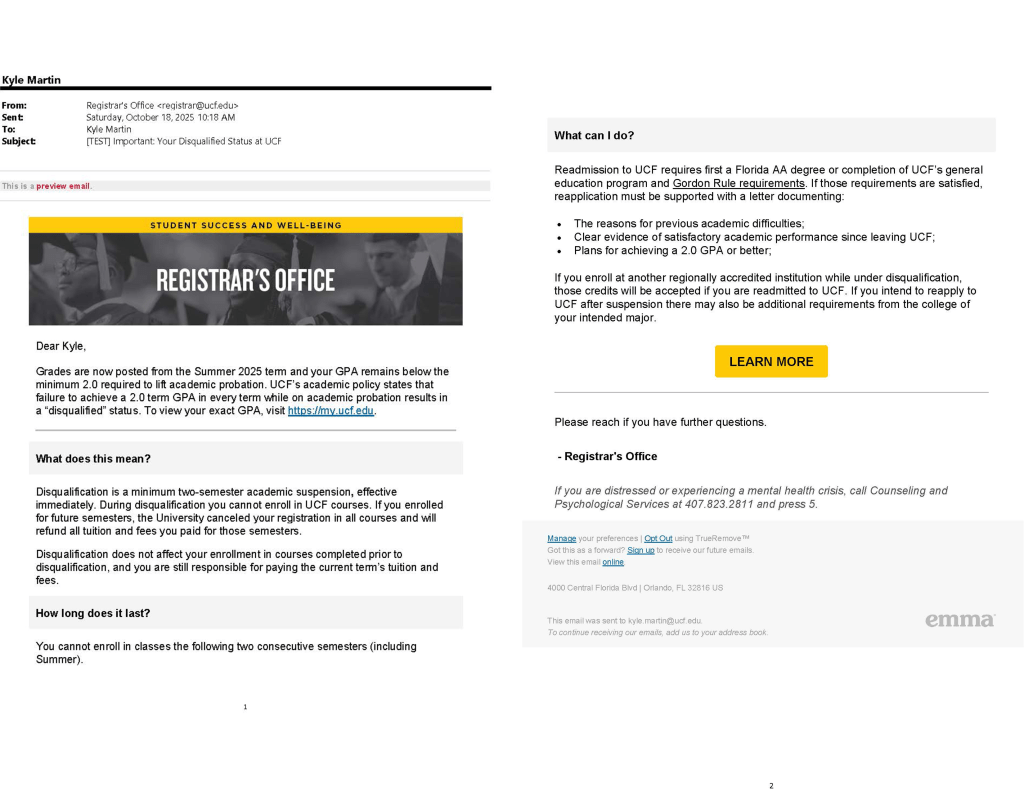
My guiding philosophy is to keep it simple and straightforward without sacrificing authority. It’s also important to think of our recipients as real people, not just names on a list. Both of those thought processes contributed to my refresh of our academic notice emails from the Registrar’s Office. When I started the project, students received the same email regardless of whether they were placed on probation, removed from probation, suspended or expelled. It was a “heads up” that their academic standing had changed, with a link to log in and learn more.
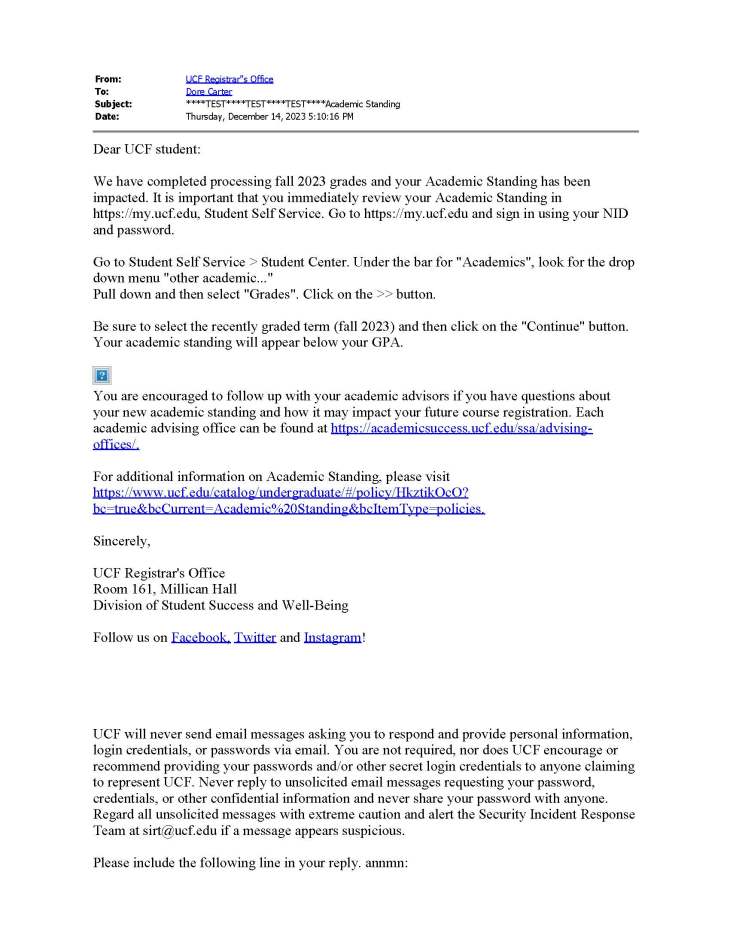
My first step was dividing out our audiences so each category received a similar but unique email. I also laid out what this means and how long it lasts. Finally, I leaned into that human side and made sure to include our mental health resources at the bottom of the email. We also made sure these emails were timed so students who had questions could reach out; no Friday afternoon emails.
 Kyle P. Martin